Slot Books, Not Standoffs: Winter Indoor Time That Actually Schools a Sharp Horse
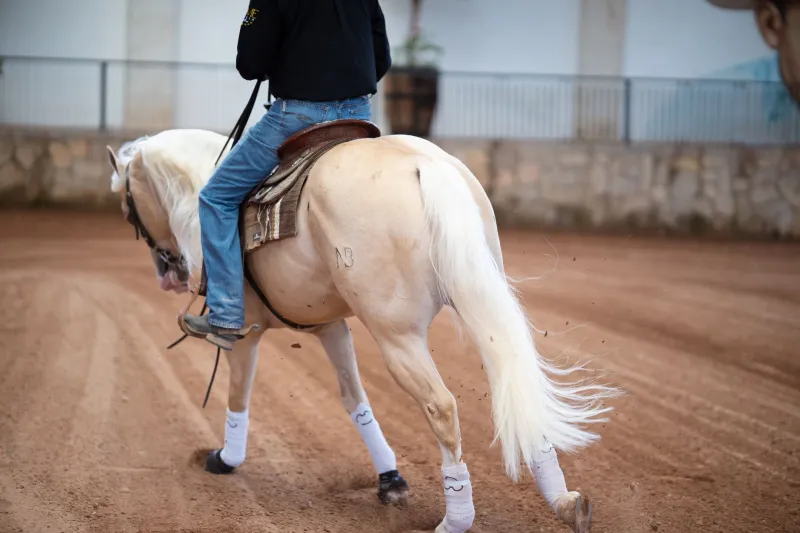
It's 4:12pm on a Tuesday in November, the light has already given up, and there are three names on the indoor board for the 6pm slot. One of them is yours. One belongs to the livery who hasn't turned up since Bonfire Night. The third is written in handwriting that could belong to absolutely anyone.
Welcome to winter.
Why the rota turns feral around now
From roughly the end of October until March, the outdoor is either under water, frozen at the gate, or being rained on sideways. The road hacking is dark by half four and the verges are a mud bath. So everyone — the dressage diva, the eventer coming back from a autumn break, the teenager with the fizzy pony — converges on the same 20 by 40 with a roof.
Demand doesn't just double when the weather closes in. It triples, because a fit horse still needs working five or six days a week and there are only so many evenings to do it in. Add school holidays, a yard where half the liveries work nine to five, and one horse who cannot be turned out with another, and you've got a recipe for a group chat that goes nuclear by December.
Booking etiquette that keeps the yard speaking to each other
Most arena wars aren't started by villains. They're started by people who simply never thought about the other name on the board. A few rules worth pinning up next to the kettle:
- Book it and mean it. If you can't make your slot, say so before it starts, not at ten past. A message afterwards saying 'sorry, didn't make it' is worse than saying nothing at all.
- Take what you need. Forty-five minutes to an hour is a session. Two hours is a hostage situation.
- No phantom bookings. Reserving the prime 6pm 'just in case' costs somebody else a proper school on a horse that genuinely needs the work. If you're not sure, don't put your name down.
- Agree direction before you get on. Two people schooling on opposite reins in a small indoor is how you end up with a collision and a vet bill.
- Protect the green horse's slot. If the 5pm belongs to a four-year-old with three weeks under saddle, don't book the 5:15 and then crack on with a lunge whip and a canter set.
- Offer the swap occasionally. The person who always volunteers for the grim 9pm slot earns a lot of goodwill, and goodwill is the only currency that gets you the Saturday morning in February.
Sharing a slot works brilliantly if it's planned: one in each half of the school, agreed warm-up order, agreed signals, no loose schooling while someone else is riding. It falls apart if it's improvised.
Making forty-five minutes genuinely count
When time is squeezed, the temptation is to cram. Resist it. A short, structured session beats a long, shapeless one every single time, and a sport horse who has been asked to think for half an hour comes out calmer than one who has been trotted in circles for an hour and a half.
A template that works for most horses in a busy indoor:
- Ten minutes of walk and groundwork. Marching on a long rein, halt transitions off your seat, a couple of turns on the forehand. It warms the horse up and switches on the brain before the legs get going.
- Fifteen minutes of poles and transitions. This is the meat of the session.
- Ten minutes of lateral or straightness work. Shoulder-fore, leg-yield, a bit of counter-canter if the horse is ready.
- Five minutes of stretch and finish. Long and low, walk on a loose rein.
If the school is busy, put the lateral work on a smaller circle and keep out of everyone's way. Nobody minds a horse doing shoulder-in on a 15-metre circle in the corner — they do mind one that stops dead on the three-quarter line.
Poles earn their keep in a small space
You don't need a full showjumping course to make a horse think. Four raised trot poles down the long side, ridden once each way, then one pole removed and the same line asked for with a longer stride, is a proper piece of training. A single pole on a circle at twelve, three, six and nine teaches adjustability without eating up the arena. A transition every time you cross the centre line keeps a sharp horse listening. Rein-back between two poles, then walk straight out of it, is a brilliant five-minute sharpener for the horse who's been in for three days.
Set them up, use them, put them away. Leaving poles out for the next person is a small kindness that pays back tenfold.
When riding isn't realistic
The indoor isn't only for ridden work. Long-reining a fit horse for twenty-five minutes of walk and trot is genuine exercise and does more for straightness than a rushed trot set. In-hand work — teaching a horse to stand while you move around him, to yield the shoulder, to walk over a tarpaulin or between two jump wings — is winter gold for young or spooky horses. And on the evenings when the rota has beaten you, a brisk hand-walk with a rug and a bit of grazing in hand still counts.
Be the livery everyone wants on the rota
The truth about winter arena politics is that it's rarely about the arena. It's about fairness, communication and people feeling like they're being taken seriously. The liveries who sail through the season are the ones who text ahead, keep to time, sweep up after themselves and occasionally hand over the good slot without being asked.
Your horse doesn't care whether you schooled for forty minutes or ninety. He cares whether the work was clear, whether it was fair, and whether he got to finish with a stretch and a handful of hay. Plan the slot, share the space, and use the time properly. Spring will be here before the board gets civil again.