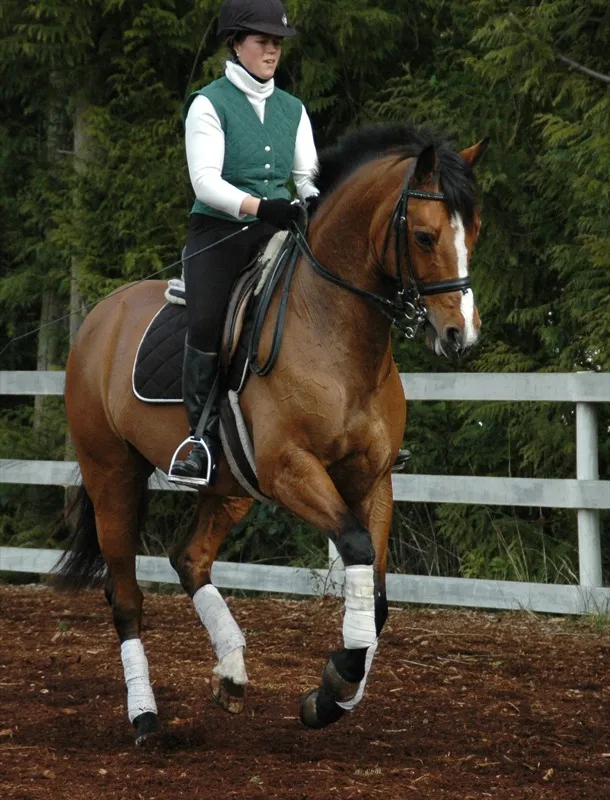
Foal to Fence: The Real-World Budget Behind a UK Sport Horse
Photo: Wasechun tashunka, CC BY-SA 4.0, via Wikimedia Commons
Breeding a sport horse is one of those projects that looks romantic from the yard gate and terrifying from the bank statement. A foal costs less than a decent second-hand car. The problem is that the foal is not the finished product, and the years in between have a habit of sending invoices.
The £30,000 question is whether you can produce a UK sport horse from foal to first BE for that sort of money. The short answer is yes, sometimes, if nothing goes wrong. The longer answer is that £30,000 is a planning figure, not a guarantee. For this article I spoke to breeders and producers across the UK, several of whom asked not to be named because the numbers are commercially sensitive, and built a 2026 budget from their real-world costs.
What the headline number really means
A realistic all-in range for a homebred to BE80 or BE90 is roughly £22,000 to £45,000. A sensible planning figure is £30,000 to £35,000. At the top end, you are paying for professional production, better facilities, more competition mileage and the south-east premium. At the bottom end, you own the land, do the work yourself and get lucky with the horse.
That last point matters. The £30,000 horse is not a guaranteed BE90 schoolmaster. It is a horse that has been bred, kept, backed and produced far enough to get to its first event. The first event is the start of the spending, not the end.
The line-by-line budget
These figures are 2026 prices in pounds sterling. They assume a mix of DIY and assisted livery, not a full professional yard. Add 20 to 40 per cent if you are in the south-east or using full livery.
| Stage or item | Typical 2026 cost | Notes |
|---|---|---|
| Mare or stud fee | £600-£2,500 | Depends on stallion, fresh or frozen semen, and conception rates |
| Vet, scanning and AI | £800-£1,500 | Scans, insemination, pregnancy checks and re-checks |
| Foaling and mare care | £1,000-£2,500 | Foaling livery or night watch, plus post-foaling checks |
| Passport, microchip, registration | £150-£300 | Studbook registration and later BE registration are separate |
| Youngstock keep, 0-3 years | £2,000-£3,500 per year | Grass or DIY to assisted livery; hay and bedding often extra |
| Farrier | £250-£450 per year | Trims, then shoes once backed |
| Vet, worming and dentistry | £500-£900 per year | Vaccinations, teeth, routine visits |
| Insurance | £300-£700 per year | Mortality and theft; vet fees optional |
| Breaking and schooling | £3,000-£6,000 | Eight to twelve weeks professional, more if the horse is green |
| Tack and kit | £1,500-£3,000 | Saddle, bridle, rugs, boots, lunge equipment |
| Transport | £500-£1,500 | To stud, vet, trainer and shows |
| Competition prep, entries and memberships | £2,000-£5,000 | BE registration, day passes, coaching, entries and fuel |
| Contingency | 15-20 per cent | The bit everyone forgets |
Add that lot up and you land between roughly £22,000 and £48,000. The middle of that range is where most sensible homebred budgets sit. A producer with staff, a competition programme and a lorry will be higher. A breeder with their own land and a forgiving boss may be lower, but they are still paying with time.
The hidden expenses
The first hidden cost is the mare. A mare that fails to conceive, loses the pregnancy or needs veterinary intervention can add thousands before there is a foal on the ground. A difficult foaling can add more. Breeders often quote the stud fee as if it is the main cost, but the mare's keep and veterinary care are the steady drain.
The second is time. A young horse does not fit neatly into a monthly budget. It grows unevenly, needs handling, and may need an extra year before backing. One Shropshire breeder told me: 'The foal is the cheap part. Keeping a young horse sound and growing for four years is where the money goes.'
The third is the horse that is not ready. A horse that needs an extra six months at grass, a joint check or a quieter start can push the first BE back a year. That is not failure. It is normal. But it costs money.
The fourth is competition. A Yorkshire producer said: 'People budget for the entry fee but not the diesel, the day off work, the coaching and the new saddle that does not fit.' BE registration, day passes, travel and warm-up classes add up quickly. First-event costs can easily run to several hundred pounds before you have bought a photograph.
The fifth is the second horse. Once you have one homebred, the temptation is to breed another. Two young horses on the same yard double the fixed costs and halve your flexibility if one needs extra care.
Realistic timelines
A foal born in spring 2026 will be weaned later that year, turn one in 2027, and be backed at three or four depending on maturity. Many sport horses are not ready for their first BE until they are five or six. A four-year-old can go to a first BE80, but it is not a race. Growth plates, confidence and soundness matter more than an early entry.
Plan for a five-year window from covering to first event, with a six-year window as a realistic fallback. If you want a horse to ride this season, buy one. If you want a breeding project, accept that the timeline is a range, not a promise.
How to plan the money
Set a budget with a contingency from day one. Keep the horse's costs in a separate account if you can. Insure for the risks you cannot absorb, and read the exclusions. Ask breeders and producers for all-in quotes rather than headline fees. Budget for five years of keep, not one. And be honest about why you are doing it.
Homebred success is not a shortcut. It is deferred spending with more variables. If you have £30,000 to spend and want to compete now, a made horse may give you more riding per pound. If you want the project, the breeding, the young horse and the long game, go in with your eyes open. The first BE fence is a wonderful milestone. Just make sure you can afford the road that gets you there.