Short Days, Hot Horses: Winter Work That Keeps Sharp Sport Horses Thinking
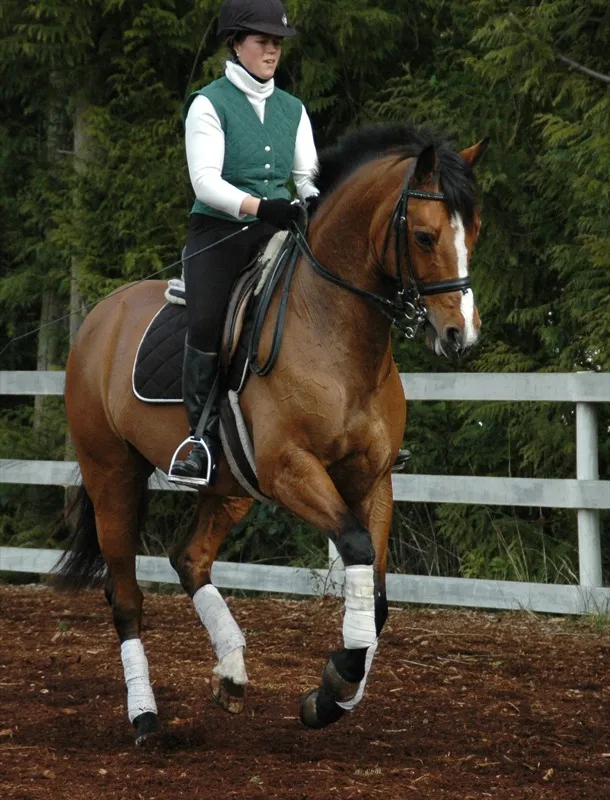
Photo: Nikki from Canada, CC BY-SA 2.0, via Wikimedia Commons
Winter has a way of making a fit horse look like a problem. The clocks change, the fields turn into a mud bath, the arena lights come on at 4pm and suddenly your sport horse is doing more work in a 20-metre circle than they would in a week of proper hacking. In 2026, with energy bills still a talking point and another autumn of record rainfall leaving gateways deep enough to lose a boot, the usual winter compromises are back with a vengeance.
The aim from November to February is not to keep a horse at peak fitness. It is to keep them sound, supple, sane and close enough to fit that you can build again in spring. That means planning the week around quality rather than quantity, and accepting that turnout, clipping and forage are part of the training plan.
Start with the non-riding stuff
Before you book a hundred arena sessions, sort the basics. Turnout is the cheapest sanity tool you have. Even 20 to 30 minutes on a hardstanding area or a sacrifice paddock can take the edge off a sharp horse, provided it is safe and they have company. If your horse is explosive, the answer is rarely less turnout; it is usually more turnout and better work. Total stabling is sometimes unavoidable for veterinary reasons, but it should not become the default winter routine just because the field is wet.
Clipping is the next decision. A trace or blanket clip is often more useful than a full clip for a horse in light to moderate work, because it leaves enough coat to cope with standing in a cold field without being fully rugged. A full clip suits a horse in hard work, but it demands honest rugging. Do not overrug a clipped horse and do not underrug an unclipped one. Check them daily under the rug, especially around the shoulders and hindquarters.
Forage first, always. A sharp horse on restricted hay is often a hungry horse with an ulcer risk, not a calmer one. If you need to manage weight, use lower-sugar forage and slow feeders rather than simply cutting the bucket. Sharpness can also be pain: teeth, saddle fit, ulcers and hocks are worth checking before you blame the winter.
Energy costs matter here too. If you are paying to light an arena, use LED fittings, timers and shared sessions where you can. Booking two horses back-to-back with a friend can halve the cost and give both horses a calmer environment. A little planning around lights is cheaper than an extra month of schooling because you lost a week to a blown fuse.
The weekly template
Think in sessions, not hours. A sharp sport horse does not need to be drilled for 90 minutes. Most will benefit from 30 to 45 minutes of quality work, with a proper warm-up and cool-down. Two harder days should not sit back-to-back, and jumping should be followed by an easier day or turnout.
| Day | Session |
|---|---|
| Monday | Turnout plus 30-minute walk hack or arena walk |
| Tuesday | 40-minute flatwork, focusing on transitions and straightness |
| Wednesday | Rest or turnout |
| Thursday | 35-minute polework or fitness session |
| Friday | 30-minute jump or schooling session |
| Saturday | Hack if ground allows, or arena interval session |
| Sunday | Groundwork, stretching or rest |
That is a template, not a rulebook. A horse coming back from injury, a young horse or a horse on a busy competition schedule will need a different shape. The important thing is to avoid the winter trap of doing the same 40-minute school every day because the hack is flooded.
Fitness when hacking is restricted
Hacking is hard to replace. An hour of active walking and trotting on good ground does more for a horse's fitness and mindset than many riders realise. When the lanes are unsafe or the fields are closed, you can maintain a useful base in the arena, but you have to be honest about the surface and the intensity.
Arena work is more concentrated than hacking. Forty minutes in a school can equal 90 minutes of hacking in terms of loading, so do not double up just because you are short of daylight. Use polework and raised poles to build strength, and short canter sets only if the surface is good and the horse is fit enough. Deep, wet arena surfaces are tiring; frozen ground is worse. If the ground is hard, keep it walk and trot and save the canter work for a better day.
Long-reining and groundwork are useful substitutes on grim days. They keep the horse thinking without adding miles. If you have access to a horse walker or water treadmill, use it as a tool rather than a replacement for ridden work. Hill work is excellent if you have safe, thawed ground, but avoid steep slopes in slippery conditions.
Keeping the sharp horse thinking
A sharp horse is often a bored horse with too much energy and too little to occupy their brain. Groundwork can be a lifesaver. In-hand poles, targeting, shoulder-in on the ground, simple turns and halt transitions all give the horse a job. Short, calm sessions are better than long ones that end in a argument.
Under saddle, use transitions and lateral work to keep attention without drilling. A horse that is fresh may benefit from a brisk walk hack before any school work, rather than being asked to concentrate immediately. If your horse is genuinely explosive, check the basics again: saddle, teeth, back, feed and turnout. Winter does not create pain, but it can expose it.
Plan around daylight, not against it
Book arena slots in advance. Keep a head torch in the car. Have a wet-weather backup plan that is not just 'try again tomorrow'. If your yard floods, know which local arena you can hire and what it costs. A 30-minute box to an indoor school can be cheaper than a lost week of confidence, especially for a young horse.
Record rainfall in recent winters has made grass livery unpredictable, so check your yard's winter turnout policy before December. Ask what happens if the fields are closed for a fortnight. If you rely on an outdoor school, ask whether it drains properly. These are boring questions that save real money and stress later.
Review in February
By February, you do not want a horse at peak fitness. You want a horse that has done enough strength and supple work to start building again when the ground improves. Use January for poles, flatwork and steady fitness. Use February to sharpen up slightly if the weather allows. Write down what worked and what did not. A winter plan that treats every horse as an individual is worth more than a perfect schedule that ignores the horse in front of you.
Winter is not a season to survive with your horse in a stable and your fingers crossed. It is a season to manage. Keep them moving, keep them thinking and keep the work honest. Spring will ask for fitness soon enough.