Nobody Photographs a Tuesday: The Winter Routine That Holds a Season Together
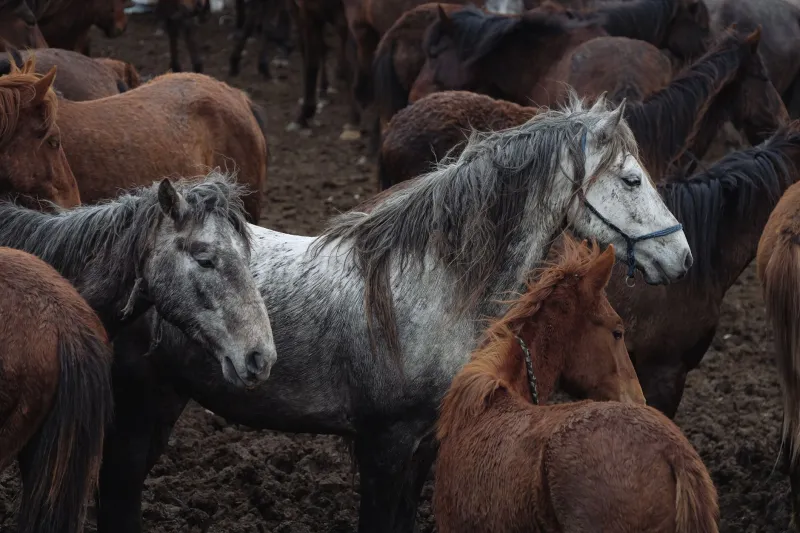
By the time most of us get to the yard in November, it is already dark. That is not a complaint, just the arithmetic of a UK winter. The clocks have gone back, the field gate has become a mud bath, and the horse who looked a picture in September is now mostly visible by headtorch.
This is the part of the year nobody photographs. There are no finish-line shots, no slow-motion replays of a clear round. What there is, instead, is a Tuesday. And another Tuesday. The quiet accumulation of ordinary days is what actually carries a sport horse into spring — not the occasional heroic schooling session, but the routine that happens when you are tired, late, cold and running out of haylage.
Start With the Day You Actually Have
Before changing anything, spend a week writing down what really happens. Not the ideal version, the real one. What time does the first person arrive? When does the horse get hay, turnout, water, a skip-out, a rug change? When is the last check, and who does it? Most of us see perhaps two hours of a twenty-four-hour day. The other twenty-two belong to the horse, the yard and the weather.
A useful exercise is to build a 'default day' — the version that runs when nothing goes wrong and nobody has extra time. It should be boring. It should be repeatable. And crucially, it should be the version you can still deliver on a wet Wednesday in January when the car park is flooded and your gloves are soaked through.
Forage Is the Spine of the Whole Thing
If the default day has one non-negotiable, it is forage. Ad-lib hay or haylage, available for as much of the day as possible, is the closest thing we have to a foundation. It keeps the gut moving, warms the horse from the inside and gives a stabled animal something to do other than invent new ways to remove a rug.
Weigh a haynet once a month, not every day. It is easy to overestimate how much a horse is getting, especially when nets are topped up by several different people. Haylage is richer than hay, so a horse on generous haylage may need less hard feed than the same horse on hay — worth a conversation with your nutritionist rather than a guess. Slow feeders help stretch the day, but they are not a substitute for enough forage.
Keep a spare bale. The default day collapses fastest when the yard runs out and someone has to make a dash to the feed merchant at 6pm. That is not a routine; that is a rescue mission.
Turnout, Even When It Is Grim
The field is muddy, the gateway is a bog and the horse will come in filthy. Turnout still matters. Movement is the cheapest physiotherapy a sport horse will ever receive, and a few hours of ambling about does more for tendons, joints and temperament than many a session in the arena.
If the herd turnout is unusable, look for the compromise: a woodchip pen, a strip of hardstanding, a shared fence line with a sensible neighbour. If the horse cannot go out at all, hand-grazing and walking in hand are not consolation prizes — they are part of the day's work. The horse that has been in for four days is not the same horse you left on Monday, and pretending otherwise tends to end in a loose shoe and a tweaked back.
Water You Can See Them Drink
Frozen troughs and automatic drinkers are a winter cliché because they keep happening. Check water at least twice in freezing weather, and keep a bucket in the stable as a backup. A horse that is not drinking is a horse heading towards colic, and the signs are easy to miss when you are rushing.
Soaked feeds, sloppy mashes and warm water can all nudge intake up. If you use automatic drinkers, watch the horse drink rather than assuming the pipe is flowing. A cheap max-min thermometer on the yard wall is a small investment for the amount of worry it saves.
Warmth Without the Guesswork
Rugging is where good intentions and British weather collide. The temptation is to pile on layers because it is cold at 7am, then find the horse sweating at midday when the sun appears. Over-rugging is more common than under-rugging in well-managed yards, particularly with unclipped horses who are already carrying a coat.
Pick a default rug for the default day and write it on the stable door. Clipped horses need more; natives and good-doers often need less. Liners and neck covers give flexibility without a daily fashion show. The aim is not to eliminate judgment, just to reduce the number of decisions you make while shivering.
The Human Timings Are Part of the Routine
Horses are creatures of habit, and so are yards. The same order of events, at roughly the same times, is genuinely calming. It also makes changes visible. If the horse is normally first out and suddenly hangs back, that is information.
Where several people are involved — staff, owners, part-loaners, a helpful friend — the routine needs to survive handover. A whiteboard in the tack room, a shared note on a phone, a simple list of what 'done' looks like: these are unglamorous but they stop the default day drifting into three different versions. The weekend routine will always differ from the weekday one; that is fine, as long as everyone knows which version is running.
Build the Bad-Weather Version
Every yard needs a minimum viable day: forage, water, a leg check, turnout or hand-walking, and a quick skip-out. Grooming can wait. The arena can wait. On the worst days, doing the basics well is a better outcome than doing half of everything badly.
Keep a small storm kit — a couple of filled haynets, a spare rug, prepped feeds — so that the bad-weather version takes minutes rather than a full replan. The horse does not care that the day was 80 per cent perfect. It cares that the hay arrived, the water was clean and the routine looked broadly like yesterday.
The Quiet Ledger
The default day is not just a schedule; it is a record. A notebook or phone note with hay eaten, droppings, water intake and behaviour gives you a baseline. When something shifts, you will see it sooner, and your vet will thank you for specifics rather than vague worry.
None of this will make it onto Instagram. That is rather the point. The season is built in the dark, in the mud, on the ordinary days when nobody is watching. Get the Tuesday right, and the spring will look after itself.