The Group Chat Isn't the Yard: Setting Norms for Messaging That Actually Works

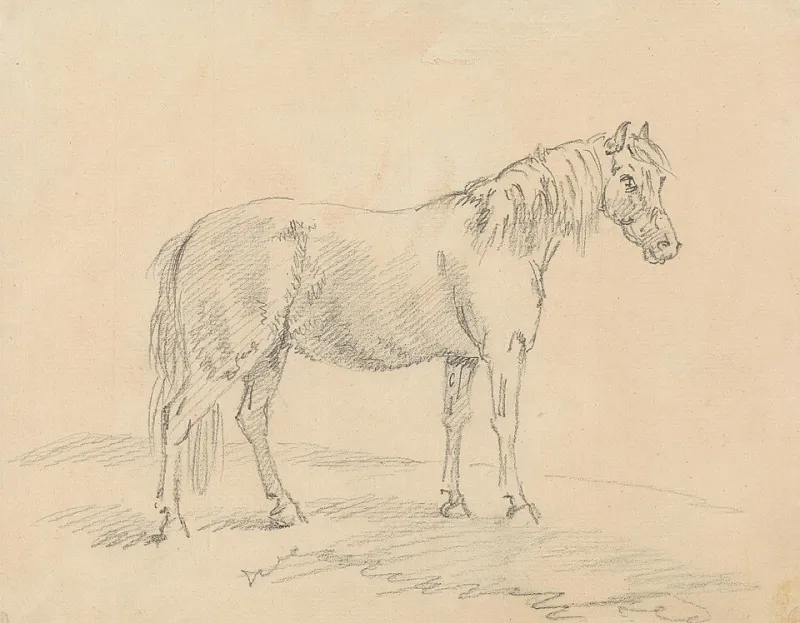
Photo: Train Photos, CC BY-SA 2.0, via Wikimedia Commons
Somewhere on a yard near you, at 6:42am, a message has just gone into a group of thirty people: 'Is anyone doing the farrier list?' By 6:44 it's buried under a photo of a horse's leg, two replies about hay prices and a joke about the weather. By 9am three people think they've volunteered and one person has done it wrong.
Yard messaging groups are one of the genuinely good developments in horse ownership — and one of the most reliable sources of low-grade friction on a competition yard. This isn't an argument for going back to a laminated sheet on the feed room door. It's an argument for treating the group as a tool with rules, rather than a room with no walls.
What the Group Is Good At
Be specific about the job it does. A yard group is excellent at fast, low-stakes information: the water's off, the hay delivery is late, the school is being harrowed at two, the vet's running behind. It's good at sharing a photo of a horse looking well. It's good for the heads-up that saves a wasted journey.
It is not good at nuance. It is not good at decisions with consequences. And it is very bad at disagreement, because text flattens tone and an audience of thirty turns a minor point into a performance.
The Turn-Out Problem
The classic is turnout. The weather turns, the fields are wet, and somebody posts at 7:10am asking whether horses are going out. Four people reply. One says theirs is staying in. One says the field is fine. One says ask the yard manager. One posts a rain radar screenshot. Nothing is decided, and by 8am a horse is standing at a gate with no rug on and nobody confident they had the authority to change the plan.
That's not a communication problem, it's an authority problem dressed as one. Turnout, rugging and feeding decisions need a named decision-maker, a stated default — 'in wet weather, horses go out for two hours unless the yard manager says otherwise' — and a broadcast channel that people actually read. Once the default exists, the group stops being a forum and returns to being an early warning system.
Practical Norms That Hold Up
One channel for notices, one for chat. Yard owners and managers need a way to send information that doesn't get swallowed by the banter. A broadcast group where only admin can post, or a pinned message list, solves most of it. Keep the social group separate and let people enjoy it.
Decisions are confirmed in writing by the person who owns them. If a plan changes shape, the person responsible posts the final version. Everyone else speculates at their own risk.
No decisions made by silence. 'Nobody objected' is not agreement on a competition yard. If a change affects a horse's care, it needs an explicit yes from the person who owns the decision.
Raise concerns privately first. Anything about an individual horse's welfare, an individual person's handling, or a bill goes one-to-one with the relevant person. Putting it in the group makes it a public matter and it'll be treated as one.
Pictures with permission, particularly when things have gone wrong. A photo of somebody's horse with a cut leg or a swollen tendon isn't neutral content. It's their horse. Ask first.
Time boundaries. Not everyone wants a phone lighting up at eleven at night. Establish what counts as an emergency and what can wait until the morning — and then honour the difference.
One clear escalation route. If something is urgent and the group isn't moving fast enough, there should be a number to ring. That's not drama, it's just a sensible plan.
When the Yard Is Under Pressure
Group chats become genuinely useful in a crisis — a lost horse, a broken fence, a stuck lorry on the lane. They also become genuinely awful in a crisis, because forty people want to help and nobody is coordinating. The value of having a decision-maker and a broadcast channel in place is that it's already established when the pressure arrives. You don't have to invent a protocol at 9pm in the rain.
If the yard is going through a difficult stretch — a change of management, a disease outbreak, a run of bad weather — it is worth someone saying out loud: for the next fortnight, decisions go through X, and the group is for information only. People are surprisingly reasonable when they know what's expected of them.
The Tone Thing
A final point that gets left out of most of these discussions. On a shared yard, the group chat is where people watch each other being treated. If the tone is sarcastic, people stop raising things, and the things that go unraised are usually the small worries that turn into large ones. If the tone is practical, people report problems early — and a yard that hears about problems early is a yard that sorts them cheaply.
None of this requires a policy document. It requires a few sentences in the group, repeated when new people arrive, and a manager who's willing to say the boring thing twice. The group chat isn't the yard. But it shapes it, every single day.