Miles With a Purpose: Making Roadwork Earn Its Place in the Plan
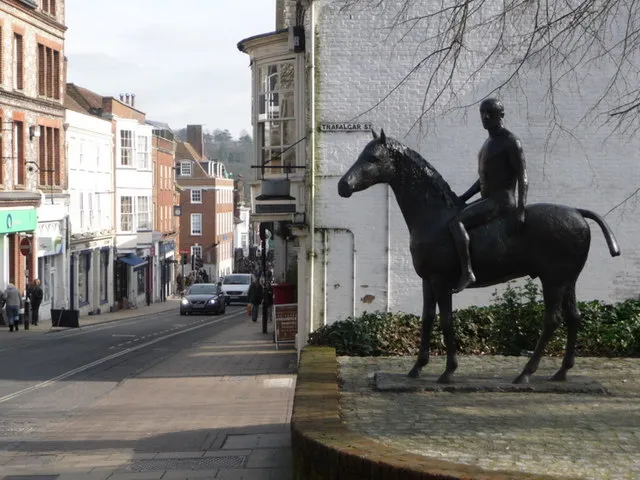
Photo: Chris Downer , CC BY-SA 2.0, via Wikimedia Commons
There's a quiet assumption in a lot of training diaries that hacking sits outside the serious work. Schooling is work, jumping is work, the gallops are work — and the hack is what you do when you can't be bothered. That's a fair description of some hacks, admittedly. But it sells short what a well-planned route can do for a sport horse, especially one who spends most of the week in an arena.
At LG Sport Horses, we've stopped calling roadwork a day off. It's a session with its own purpose, its own variables and its own risks. Treat it that way and it becomes one of the most versatile tools in the yard.
Why the Road Is a Training Surface
Arena surfaces are forgiving and predictable. That's their job. But predictability is also their limitation: the horse never has to think about where to put a foot, and the same joints take the same load in the same way, week after week.
Roadwork introduces variation. Tarmac, packed bridleway, uneven verge and the occasional stony track ask for different footfalls and different muscular effort. Long periods of walk build tendon and ligament resilience far more gently than fast work on a surface, and steady hill work adds strength without the concussive load of jumping. Add in the mental side — traffic, pigeons, a wheelie bin mid-pirouette — and you've got a session that trains composure as much as fitness.
The catch is that roadwork done badly is just mileage. Done well, it's structured.
Pace, Terrain and the Fit Horse
Think of a hack in the same terms as a schooling session: what's the objective, and what's the appropriate intensity?
For a horse coming back from a break or building a base, long periods of active walk on a varied route are gold. Active walk means marching, not ambling — the horse stepping under himself, neck relaxed, rhythm metronomic. Twenty minutes of that is worth more than an hour of stopping to look at things.
Trot work on the road should be deliberate, not accidental. Short, rhythmic trot sets on good straight stretches build cardiovascular fitness, but hammering a horse up and down a cambered lane for forty minutes is a fast route to sore shins and grumpy farriers. Save the longer trot work for softer ground where you can, and keep the road trot short and purposeful.
Canter on the road is a no. On grass or a suitable bridleway, a controlled canter is fine if the ground is right and the horse is balanced. If you're unsure, don't. There's no fitness gained from a scramble.
Hills deserve their own mention. A steady walk up a decent incline, repeated two or three times, is quietly excellent conditioning. It builds hind-end strength and teaches a horse to use himself properly without the impact of faster work. Find a lane with a gentle rise and you've got a gym on your doorstep.
Staying Safe on UK Lanes
The romance of the country lane does a lot of heavy lifting in equestrian writing. The reality involves blind bends, verges full of glass, tractors on a schedule and drivers who genuinely did not see you.
A few non-negotiables. Hi-vis on the horse and the rider, every time, whatever the weather — it's not about looking smart, it's about being seen over a hedge. Ride single file on blind corners, keep left where the road allows, and never assume an oncoming driver has clocked you until they've visibly slowed. A polite hand signal costs nothing and buys goodwill.
Know your routes. A lane that's quiet at ten in the morning can be a commuter rat-run by five. Check for roadworks, fallen trees and seasonal hazards — hunt traffic, harvest machinery, the school run — before you set out. And if you're hacking alone, tell someone where you're going and take a phone. It's boring advice. It's also the advice that matters when a horse comes back from a spook with a loose shoe two miles from home.
If your horse is young or sharp, the first few hacks are a training exercise in their own right. Go out with a sensible companion, keep the route short, and get home before the horse finds a reason to lose the plot. Confidence on the road is built, not inherited.
Slotting Hacks Into a Competition Week
Where the hack sits in the week depends on what's coming. In the run-up to a show, a steady walking hack two days out can loosen a horse up and clear his head without leaving anything in the tank. The day after a competition, a gentle hack — walking only, no agenda — is often kinder than a day stood in a stable.
For a sharp horse in full work, hacking can be the pressure-release valve that makes the arena sessions productive. A horse who has trotted up a hill and seen the world is a horse who's far more likely to stand still in the school. Just don't make the mistake of using every hack as an excuse for a blast. A horse who learns that hacking equals galloping will be a handful on the road and a nightmare to bring back down.
Keep the diary honest. If the week already contains jumping, an intense flat session and a lesson, the hack isn't extra work — it's a replacement. Swap, don't stack.
When a Hack Isn't the Answer
Some days the horse needs genuine recovery, and a hack is not it. If there's heat or swelling in a leg, a change in gait, or a horse who's flat in a way that feels different from ordinary tiredness, the plan is rest and a conversation with your vet — not a gentle walk to see how he goes.
Likewise, a horse who's had a hard competition, travelled a long way or is coming off a busy block may simply need a day in the field. Rest isn't a failure of the training plan. It's part of it.
The line between useful roadwork and unnecessary mileage is usually obvious in hindsight and less so on the morning. Ask yourself what the session is for. If the answer is 'because it's Tuesday,' maybe the horse would benefit more from turnout and a haynet.
Keeping a Sharp Horse Interested
Finally, don't let the hack become its own kind of boredom. Vary the route, vary the pace, and use the environment as a schooling aid rather than an interruption. Leg-yield past a gateway. Ask for a transition before the bridge. Practise standing still while a tractor passes, then walk on calmly.
A sport horse who hacks well is a sport horse who's easier to live with, easier to keep sound and easier to produce. The road isn't the day off. It's part of the job — and a rather good part at that.