Marks in the Margin: Making a Judge's Sheet Work for the Next Six Weeks
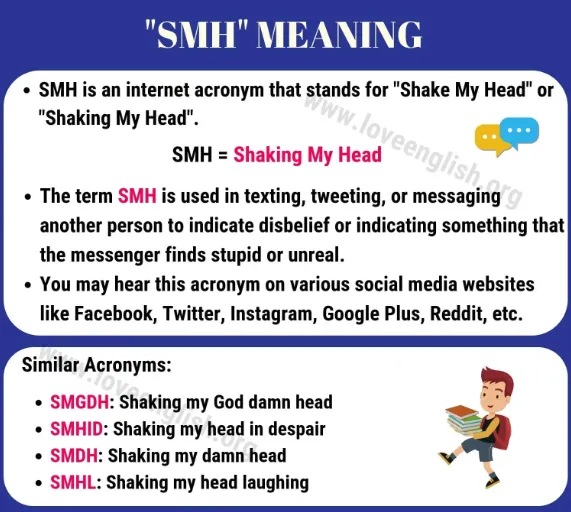
Photo: dressage judge writing on score sheet at British equestrian competition, via wordcounter.tools
Every yard has one. It lives folded in the lorry door pocket or under a saddle pad in the tack room, soft at the corners from being rained on at a showground in February. It is the dressage sheet from your last outing, and beyond the percentage and a scan of the comments, most of us never look at it again.
Which is a shame, because a judge has just spent four or five minutes watching your horse with no emotional stake in the result, and has written down what they saw. That is unusually cheap information. The entry fee bought you a test and a set of notes; treating the notes as an afterthought is leaving most of the value on the table.
Start with the shape, not the score
It is natural to look at the overall percentage first. Try to resist it for a minute. On a British Dressage sheet, the movement marks tell you where something happened. The collectives tell you how the whole picture looked — rhythm, suppleness, contact, impulsion, submission, and your own position and effectiveness. Those six boxes are the judge's summary of the general impression, and they are often more revealing than any single movement.
Look at the spread. If your collectives are clustered around the same mark, the test was probably honest and even — a fair reflection of where the horse is right now. If submission sits half a mark or more below everything else, you have found something. If rhythm is steady but suppleness is adrift, the horse is probably tense rather than unbalanced, and those are different problems with different fixes.
Movement marks have the same story to tell. Plot them roughly across the test in your head: does the score dip through the walk section, the canter tour, the rein-back, the free walk? The weakest third of the test is usually the most useful place to spend your time.
Repeated comments beat dramatic ones
One "needs more bend in the corner" is a moment in a test. Three sheets in a row saying the same thing is a pattern, and patterns are what you train.
Keep a running note on your phone or a page in the diary. Every time you come home from a competition, copy across the three or four phrases that appear. Over a season, certain words will keep turning up — hollow, rushed, tight in the neck, needs to come back, lacking straightness on the centre line. Those recurring phrases are, in effect, a free consultant's report.
It also helps to notice what has stopped appearing. Comments that have quietly dropped off the sheets are worth celebrating, because they show the work at home is landing.
Comparing sheets without fooling yourself
A word of caution: comparing raw percentages across a season is close to meaningless. Different judges, different days, different weather, different tests with different coefficients. A 64% in a novice test on a blustery day in April and a 66% in an elementary in July are not the same currency.
What you can compare is the internal ranking of the sheet. If the walk was your weakest section in May and it is now mid-pack, that is real progress regardless of the number at the top. If the same judge sees you twice at the same venue — a Area Festival, a regionals warm-up, a venue's own series — that is a much fairer read than two sheets from opposite ends of the country.
It is also worth checking which movements carry a coefficient. A wobbly medium trot worth double marks will move the percentage more than a scrappy halt, and it deserves more of your training time as a result.
Turning it into six weeks of work
Here is the part almost nobody does. Pick two priorities — no more — and give them six weeks. A sheet that generates a list of nine things generates no plan at all.
The rough structure that tends to work:
- Weeks one and two — diagnose and install. Break the priority down to something small and repeatable. If it is "needs more bend", that might be shoulder-fore on a circle, then a simple leg-yield, then the corner itself. Short, frequent sessions beat one heroic school.
- Weeks three and four — add a little pressure. Same work, but with a bit more pace, a bit less preparation, or at the end of a session when the horse is tired. This is where it starts to become reliable rather than tidy.
- Week five — test-ride at home. Full test, called by someone else, marked honestly by a friend or your trainer. Do not stop to fix things; ride it as a test.
- Week six — go and use it. Either a competition or another full test at home, and then compare the new sheet against the old one with the two priorities in mind.
Keep a single line on the yard whiteboard: the two priorities and the date you started. It is remarkable how much harder it is to drift into aimless schooling when the aim is written down.
When to ask a human
Most trainers are happy to look at a sheet, and many judges will talk you through a test politely if you approach them at the right moment — not in the lorry park ten seconds after your test, ideally by email a few days later, and never to argue a mark. The useful question is never "why did I get a six?" It is "what would more submission have looked like in that test?"
You will get far more from a judge by asking what they wanted to see than by asking them to justify what they gave you.
Chase the pattern, not the mark
Marks move around. A horse that goes beautifully on a Tuesday can score two marks lower on a Saturday for reasons that have nothing to do with training: the ground, the wind, a busy warm-up, a judge whose scale sits slightly differently from the last one.
Patterns do not wobble. If the same comment follows you around the country for a season, it is yours to fix. That is the sheet's real job — not to tell you how you did, but to tell you what to do next.
So dig it out of the lorry door pocket. Flatten it, read the collectives, count the repeat phrases, and pick two things. Six weeks from now, you will have a new sheet to compare it with.